Indoor & Outdoor


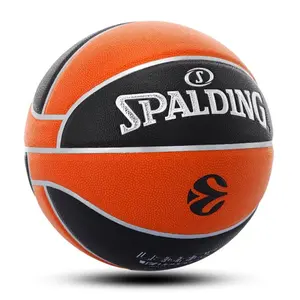


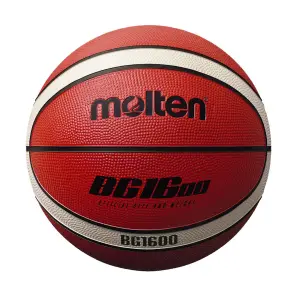


Training at the gym during the week, shooting at the local court on the weekend, and just one indoor/outdoor basketball in the bag for both, as long as you choose it well. Its reinforced composite or synthetic cover can handle the asphalt without losing its feel indoors.
It's also the most common choice for a child taking their first steps in a club.
The compromise of the reinforced composite
A versatile ball takes a bit from both worlds. Its outer layer is thicker than a court composite, making it more resistant to abrasion, yet softer than street rubber, so it's more pleasant on hardwood. The best ones have a pronounced texture that remains grippy even when hands are sweaty.
Its limitations
Let's be honest: it doesn't replace a match ball or a proper street ball. Indoors, its feel is just below that of a top-end composite. On a very rough court and with several outings a week, it will wear out faster than rubber. However, for mixed and regular use, it's the most cost-effective purchase.
The choice of basketball schools and families
Basketball schools and parents appreciate it for a simple reason: one ball follows the child everywhere. It moves from the gym on Wednesdays to the garden hoop, and its durability withstands bounces on gravel. Choose size 5 up to U11, and size 6 for U13.
Team colours, in a versatile version
A good number of balls in team colours are listed here. You'll find balls from NBA and WNBA franchises, European club balls like Asvel, Monaco, or Baskonia, and even a Harlem Globetrotters ball. They can be used both outdoors and indoors, with a design that delights fans as well.
Specialised balls: indoor or outdoor
If your use is clearly leaning towards one side, a specialised ball will perform better. The indoor balls provide the best feel for indoor games. The outdoor balls made of rubber last longer on asphalt. All families can be found on the balls by surface page.
Five brands, five ways to bridge the gap
- Molten offers the BG3000 and BG3200 training balls, and the BG2010 in rubber recommended by the FFBB for basketball schools.
- Wilson features the NBA All Team ball, WNBA balls, and the official FIBA 3x3 ball.
- Spalding has the most models, with the TF Gold and TF Silver Composite, the React TF-250, and the TF-500 Excel, plus mini-club balls.
- Nike includes several All Court balls designed for all surfaces.
- Baden Sports completes the range with its multi-surface balls.
A cheaper versatile ball
Discounts can be found on the site's deals pages. The Black Friday balls kick off the year-end, followed by the Christmas ball selection, and then the sales. The new arrivals show the latest products, and the clearance features discontinued items.
Frequently asked questions
Can an indoor/outdoor ball be used in an official match?
Only if it carries the certification required by the competition, which is rare for a versatile model. For club matches, the ball is generally provided and certified by the FFBB. The versatile one remains ideal for personal training.
How long does a versatile ball last when used outdoors?
With one or two outings a week on a good surface, it generally lasts a good year before becoming smooth. A very rough surface shortens this lifespan. Keep it inflated to the right pressure, and it will wear less quickly.
Reinforced composite or synthetic for a versatile ball?
The reinforced composite offers a better feel indoors, while synthetic is more durable outdoors. If you mostly play in a gym and occasionally outdoors, go for the composite. If it's the other way around, choose the synthetic.
Should the ball be cleaned after a game outside?
Yes, especially before returning indoors. Dust and gravel stuck on it can scratch the floor and reduce grip. A damp cloth is sufficient, followed by air drying.
Can a European club ball really be played with?
Size 7 or 6 balls play like any versatile ball. Mini-club balls, which are smaller, are mainly for children and collectors. Check the size indicated on the spec before choosing.